
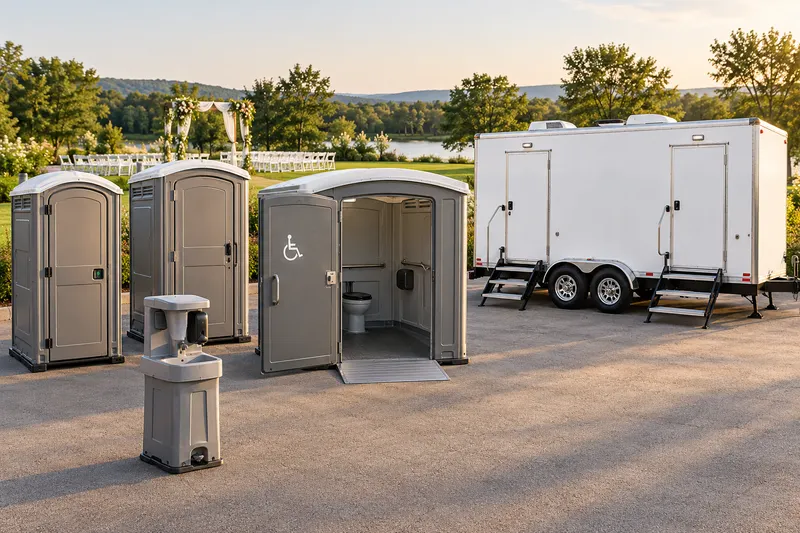
Identify the human-use gap at the property
For exterior work, explain whether workers may use a household bathroom or need their own temporary facility. For a gathering, consider guests, helpers and any relevant access functions. A standard cabin and personal washing may address a straightforward gap, while different features should be discussed explicitly rather than selected from an assumed stock list.
Separate temporary facilities from utility work
Hamilton County’s Water and Wastewater Treatment Authority provides a Lakesite information and sewer-contact page. That public service context does not establish the connection at every individual property or turn a portable rental into plumbing work. If permanent systems are part of the project, use the appropriate property and utility professionals while arranging the people’s temporary facilities separately.
Review the actual model and property resources
Ask what the offered equipment requires and what functions are included. A flushing cabin or trailer must not be connected to nearby household utilities on the customer’s initiative. Give the provider accurate property information for assessment and use the agreed setup, keeping ordinary washing and toilet use separate from construction liquids, tools or other materials.
Arrange delivery and service around continued occupation
Explain the legitimate receiving access and the period when residents or workers will remain at the property. Review placement with the responsible parties so people can use the facilities and the supplier can service them. Confirm collection or an extension from the real facility need rather than assuming a scheduled household repair will finish at precisely the planned time.
Questions before you book
Does a portable toilet quote include work on the home’s sewer connection?
No such work should be assumed. Keep property plumbing or utility work separate from the accepted portable sanitation arrangement.